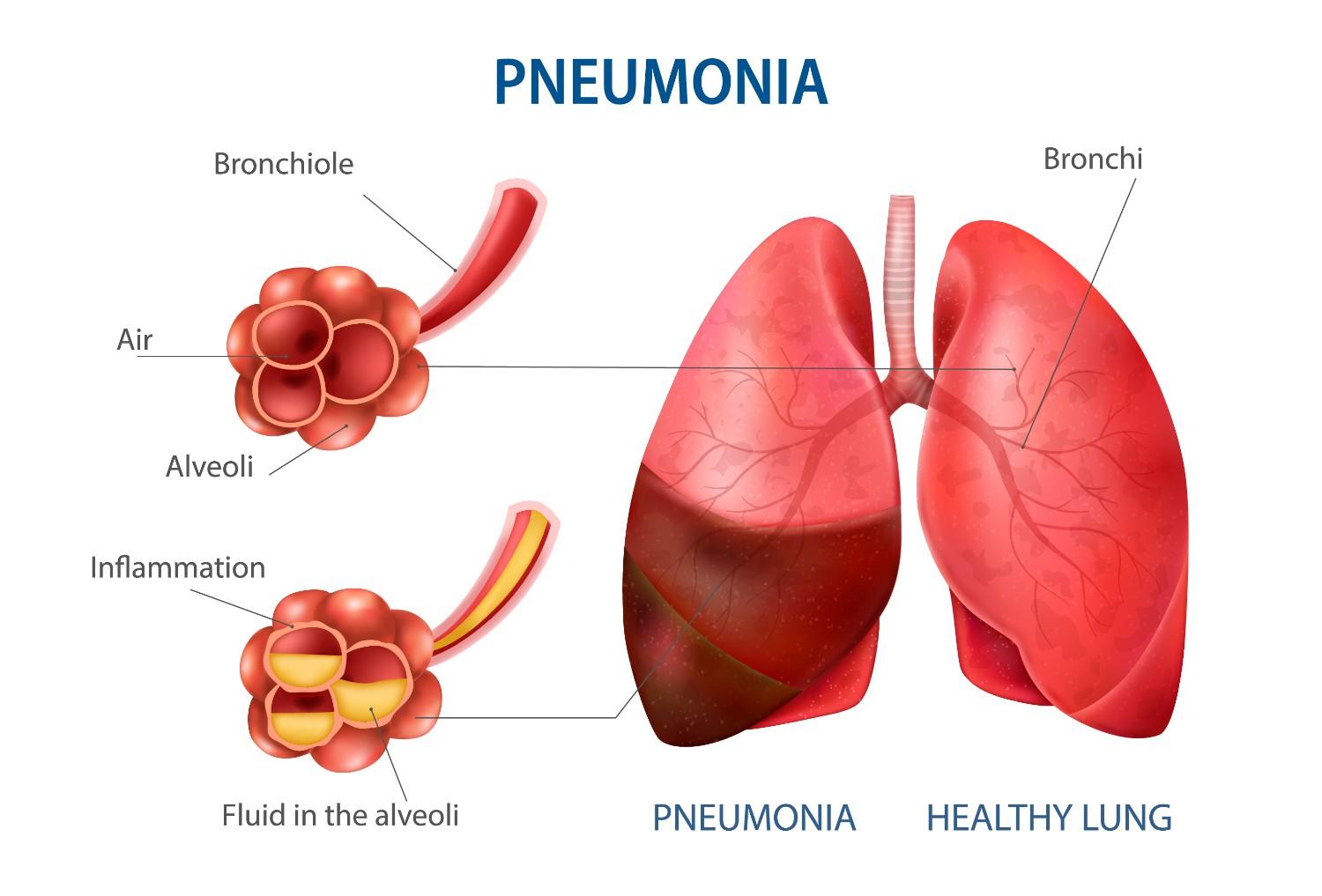
It is a serious lung infection that causes inflammation in the air sacs (alveoli) of one or both lungs. These air sacs may fill with fluid or pus, making breathing difficult and reducing the amount of oxygen reaching the body. Pneumonia can range from mild to severe and may become life-threatening if not treated on time, especially in young children, elderly individuals, smokers, and people with weakened immune systems or chronic diseases.
Pneumonia can be caused by bacteria, viruses, fungi, or other infectious organisms. It may develop after a common cold, flu, or respiratory infection when the lungs become vulnerable to infection. The condition can spread through airborne droplets from coughing or sneezing and may also occur due to poor immunity, smoking, pollution exposure, or underlying lung diseases.
Symptoms may vary depending on the age, immunity, and severity of infection, but commonly include:
Persistent cough with or without mucus
High fever and chills
Shortness of breath
Chest pain while breathing or coughing
Rapid breathing or difficulty breathing
Fatigue and weakness
Wheezing or noisy breathing
Loss of appetite
Sweating and body aches
Bluish lips or nails due to low oxygen levels in severe cases
In elderly patients, symptoms may also include confusion or sudden weakness
Diagnosis usually includes a physical examination, chest X-ray, blood tests, oxygen level monitoring, and sometimes sputum testing to identify the cause of infection. Treatment depends on the severity and type of pneumonia and may include:
Antibiotics for bacterial pneumonia
Antiviral or antifungal medications
Nebulization and inhalation therapy
Oxygen therapy in severe breathing difficulty
Adequate rest, hydration, and nutrition
Hospitalization in severe cases
Preventive measures play an important role in reducing the risk of pneumonia and protecting lung health:
Get vaccinated against flu and pneumonia infections
Maintain good hand hygiene
Avoid smoking and tobacco exposure
Wear a mask in polluted or crowded environments
Eat a healthy and balanced diet to strengthen immunity
Stay physically active and maintain proper sleep
Seek timely treatment for cough, cold, or respiratory infections
Avoid close contact with infected individuals
Keep chronic conditions like asthma, diabetes, and COPD under control
Early diagnosis and proper medical care are essential for quick recovery and preventing serious complications related to pneumonia.

Hno. 160, I – Block, Sarabha Nagar, Ludhiana, Punjab 141001
noblechestandallergyclinic5@gmail.com
+91-8968605835
+91-7888712825