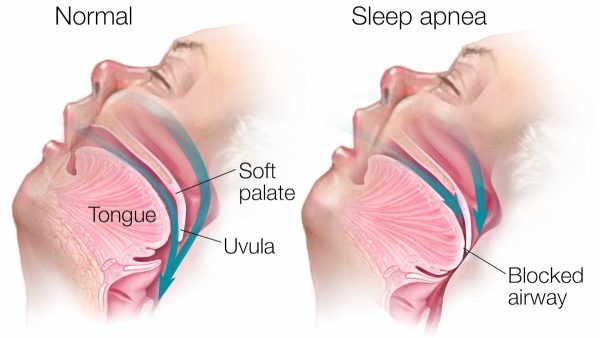
It is a potentially serious sleep disorder where breathing repeatedly stops and starts throughout the night. It is much more than just loud snoring—it prevents deep, restorative sleep and can place a massive strain on the cardiovascular system.
The most common form is Obstructive Sleep Apnea (OSA), which happens when the throat muscles relax and block the physical flow of air.
Clinical Evaluation: A doctor will review symptoms (like chronic snoring, waking up gasping, morning headaches, or severe daytime fatigue) and check risk factors like neck circumference, anatomy, and blood pressure.
Home Sleep Apnea Test (HSAT): For straightforward cases of suspected OSA, you might use a portable kit at home. It measures your heart rate, blood oxygen levels, airflow, and breathing patterns while you sleep in your own bed.
In-Lab Polysomnography (Sleep Study): This is the gold standard. You spend the night at a sleep center connected to sensors that monitor brain waves, eye movements, heart rate, breathing effort, oxygen levels, and muscle activity. This is required if central sleep apnea (a brain-signaling issue) or other complex sleep disorders are suspected.
Once diagnosed, the severity is typically measured by the Apnea-Hypopnea Index (AHI)—the average number of breathing pauses per hour. Treatment plans are tailored based on whether the condition is mild, moderate, or severe.
CPAP (Continuous Positive Airway Pressure): The most common and effective treatment. A machine delivers a steady stream of pressurized air through a mask, acting as a “pneumatic splint” to keep the airway from collapsing.
BiPAP (Bilevel Positive Airway Pressure): Similar to CPAP, but it adjusts the pressure, delivering higher pressure when you breathe in and lower pressure when you breathe out. Often used if CPAP is uncomfortable or for specific respiratory conditions.
Oral Appliances: For mild-to-moderate OSA, a custom-fitted dental device (similar to a mouthguard) can be worn. It shifts the lower jaw slightly forward, pulling the tongue away from the back of the throat to keep the airway open.
Weight Management: In many cases, losing weight can significantly reduce or even eliminate tissue obstruction in the throat.
Positional Therapy: Sleep apnea is often worse when sleeping flat on the back (supine position). Using special pillows or body wedges to stay on your side can help keep the airway clear.
Avoid Alcohol and Sedatives: These substances relax the muscles in the back of the throat, worsening airway collapse.

Hno. 160, I – Block, Sarabha Nagar, Ludhiana, Punjab 141001
noblechestandallergyclinic5@gmail.com
+91-8968605835
+91-7888712825